Module 4 of 10
Neurodivergence, Disability, and Access
- 1Previewand choose
- 2Contextand the film
- 3Look aroundthe room
- 4Observevs. assume
- 5Rehearsea response
- 6Closeand transfer
Before anything plays, you choose how to take part
In the training, mentors put a phone in an inexpensive cardboard viewer, or simply use a phone or laptop. Here you can get the headset experience without one. Every route leads to the same task. No one is asked to explain their choice or share anything personal.
One account, made with the people it shows
This is the clip I demoed live at my 2025 capstone, where I invited someone from the audience to try the headset. It's Autism TMI Virtual Reality Experience, a 360° film from the National Autistic Society made with autistic adults and children. It is one edited account. It can show the demands a setting creates. It cannot show what autism "feels like" for everyone, and it is not a basis for guessing anyone's diagnosis.
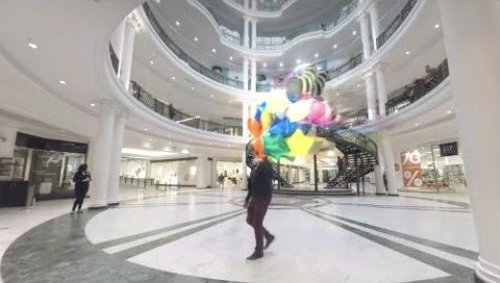
Written alternative. A child walks through a crowded shopping centre with a parent. Announcements, music, and conversations overlap. Lights flicker, people brush past, and a stranger's comments are loud and close. The scene builds until the child is overwhelmed, and the people around them react to the behavior without seeing the environment.
While reading, notice the demands the place creates, like sound, light, movement, crowding, and what other people expect.
While you watch, ask yourself what you can directly see and hear, which demands come from sound, light, movement, timing, or other people, and where you're being invited to guess.
Now a mentoring session. Find what the room asks of Avery
A fictional composite. Avery, 13, meets a volunteer mentor after school in a busy community room. The mentor planned a card activity with several steps. Look around and tap anything that adds a demand. Switch seats to see the room from Avery's side.
- Open this page on your phone and turn the phone sideways.
- Tap Use phone motion and allow access, then tap Full screen.
- Slide the phone into the viewer with the divider lined up with the centre of the viewer.
- Turn your head to look around. Hold the white dot on anything for about a second to select it.
- Take the viewer off whenever you like. Switching seats and the next steps work best on the phone screen.
Move your cursor toward the edge of the view to turn your head. Rest the centre dot on anything that adds a demand. On a touchscreen, drag to look.
The room, described. A TV is on near the entrance. Two other mentor pairs are talking at nearby tables. Staff carry chairs through now and then. There is no clock in view, and no end time has been given. On the table is a card activity with six printed steps. Down the hallway, there is a single empty chair where it is quieter.
What did you see, and what did you add?
Here's what happened next. Avery asked twice when the meeting ends, kept a hood up, and sorted the cards by colour instead of following the directions. When the mentor repeated the directions, Avery said, "I don't want to do this," and moved to the chair by the hallway. For each statement, decide whether it was observed or is an inference.
Avery is by the hallway. What do you say?
Choose the response you would try. Then compare it with the curriculum's model.
The curriculum's model response
"This room has a lot going on, and this activity has several steps. We could take the cards to that quieter table, do just one part together, or switch to something you choose and come back to this another day. What would make the next twenty minutes work better for you?"
Take off the viewer. Look around the room you're actually in.
The stop is part of the design. Moving between a virtual scene and a real one can disrupt memory, so every module ends with writing, discussion, and one concrete step.
Give an end time and a short agenda at the start, and offer a quieter spot before it's needed.
"Would less talking, more time, or a different space help, or something else?"
Adjust the activity and share a factual note with program staff. Don't diagnose, test, or contact a school on your own.
One of ten modules, 40 of 390 minutes, built from 77 sources. Each pairs a short film with context, practice, and a way to opt out.
Avery and the session are a fictional composite written for training. The film belongs to the National Autistic Society.